Prälat Dr. Peter Klasvogt
Founder & Chairman of the Kuratorium
Rector of the Pontificio Collegio Teutonico, Vatican City.
Christian principles. Shared responsibility.
Rooted in Christian principles, Magnifica Humanitas brings people and institutions together for the dignity of every person and the common good. Through formation and leadership programmes in Rome, we form priests, educators and institutional leaders — and the lasting relationships that sustain their service.
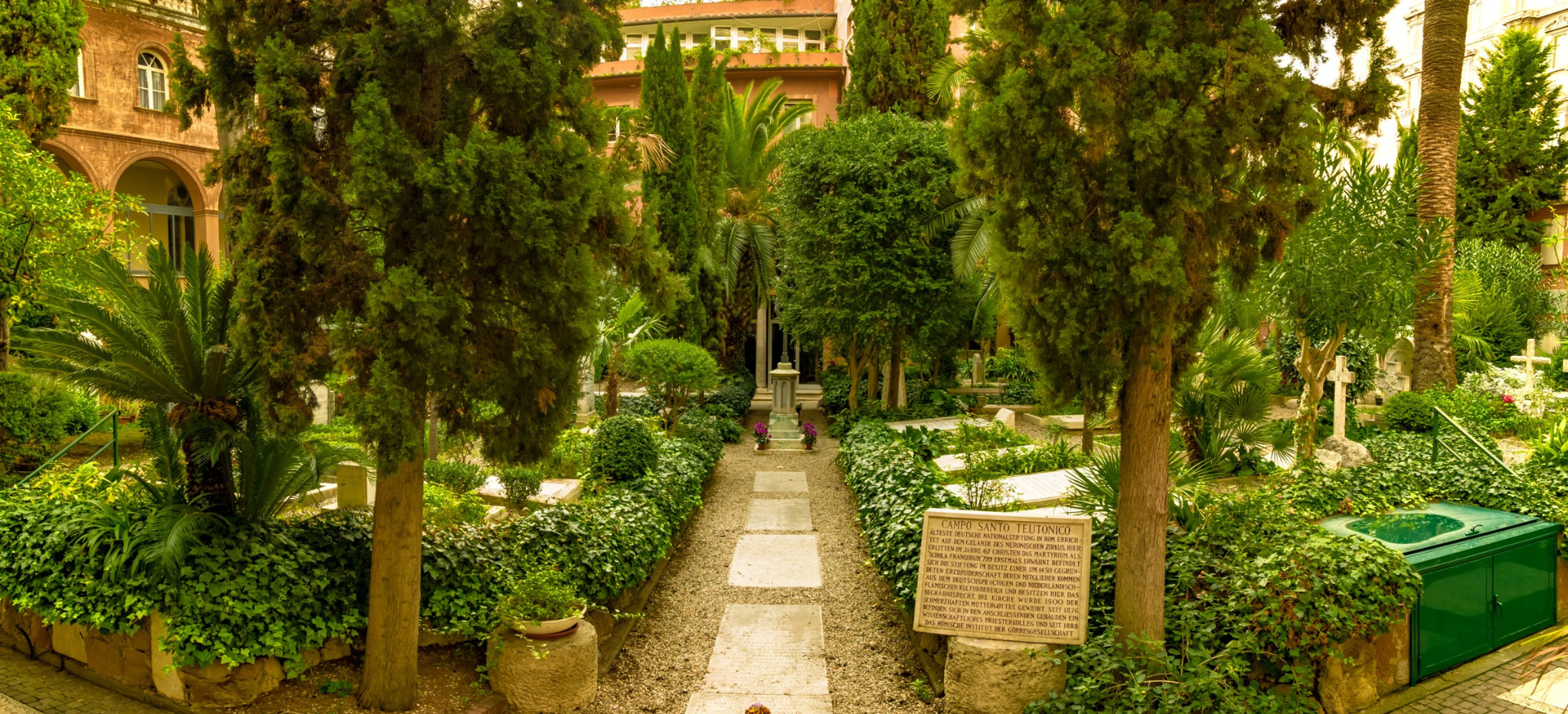
at the Campo Santo Teutonico, Vatican City
Discover the CollegioRome · Europe · The common good
The Pope's visit to Metz reminds us of the urgency of building the Europe of today and tomorrow.
“As I share these reflections with you, I am thinking above all of young people, who are called to build the Europe of today and tomorrow.”
“May this idea of a reconciled, united, and strong Europe henceforth be the watchword for the younger generations, eager to serve a humanity finally freed from hatred and fear, which is rediscovering, after too many years of division, Christian brotherhood.”
Habt keine Angst, euch unermüdlich für das Wohl eurer Gemeinschaften einzusetzen, auch durch politisches Engagement.
Have no fear in working tirelessly for the good of your communities, including through political engagement.
Stiftet Gemeinschaft!
Build community!
Und mit euch wird Europa, fest verwurzelt, weiter gedeihen und die ganze Welt inspirieren.
And with you, Europe — firmly rooted — will continue to flourish and inspire the whole world.
Pope Leo XIV · Metz, 28 September 2026 · Official address: Deutsch · English
This is the work Magnifica Humanitas exists for: forming the people who will build this Europe — in Rome, for the whole continent.
Every person bears a God-given dignity. The grandeur of the human person — magnifica humanitas — calls us to a shared responsibility: to nurture each person’s gifts, stand with those who are vulnerable and serve the common good.
People renewed in faith, understanding and relationships can help renew the communities and institutions they serve. We envision a growing alliance of priests, educators and leaders who carry Catholic social teaching into the life of the Church and society.
We invest in people through residential formation at Campo Santo Teutonico, leadership programmes, personal mentoring and the shared path of VIA. Participants grow through prayer, study and exchange — with a community they return to each year.
Our spiritual & institutional home
Pontificio Collegio Teutonico
at Campo Santo Teutonico
The Pontificio Collegio Teutonico — a hub for on-going formation in the spirit of the Catholic Social Teaching of Magnifica Humanitas.
Beside Saint Peter’s Basilica, a tradition of prayer, study and shared life gives formation its setting.
The Foundation is rooted in the Pontificio Collegio Teutonico at Campo Santo Teutonico. Here, prayer, study and personal encounter nurture the trust and friendships through which a lasting community takes shape. The formation of the Foundation does not borrow the Collegio's rooms — it borrows its rhythm: prayer, study and shared life, practised here for 150 years.
Established in 1876 and granted pontifical status in 2010, the Collegio brings together clergy and lay scholars pursuing study and ecclesial service in Rome. Common life, daily worship and scholarly exchange are at the heart of its tradition.
Explore the Collegio’s official websiteAt the Campo Santo, formation grows through daily life: prayer, study, the common table and personal exchange.
Community is not the framework of formation. Community is the formation.
A shared path
VIA is not a curriculum to complete. It is a road walked together — in prayer, at a common table and in personal exchange. VIA (the Latin for “road”) offers five steps for formation, discernment and responsible service: Aspicere → Iudicare → Deliberare → Agere → Redire. Together, participants learn to read the signs of the times, draw on Catholic social teaching and discern how to serve. A practical initiative in their own institution is one fruit of this formation; returning to the community creates space for gratitude, learning and renewal.
VIA is not a curriculum to complete. It is a road walked together — in prayer, at a common table and in personal exchange.
Choose a numbered step to explore the cycle.
Reading the signs of the times: what AI, work, war and media really change in the lives of people and institutions.
In community: Listening together — the day begins with prayer; reality is read before it is judged.
The principles of Catholic social teaching as criteria of judgement — the nine Principles Cards are a working instrument, not a declaration.
In community: Studying together — around one table, across rites, nations and professions.
Shared, synodal discernment of a concrete good in a concrete context — with the Church and with science.
In community: Personal exchange — evening colloquia and honest conversation, face to face.
Designing and launching an institutional pilot: the "section of the wall" becomes a public commitment.
In community: Committing before the community — each promise spoken aloud before the cohort.
Evaluation, gratitude, renewed formation — the cycle begins again, now with experience.
In community: Returning in gratitude — the Magnificat, and the yearly reunion in Rome.
Principles Cards
Catholic social teaching is turned into criteria of judgement: nine principles, each expressed as one practical norm. These cards are the analytical tool of the Iudicare step — not a declaration, but a working instrument.
Every programme opens and closes with the Examen, rooted in the two images of the encyclical: does your structure, technology or change build Babel — homogenisation, self-assertion, dignity sacrificed to efficiency — or does it rebuild Jerusalem, where each family rebuilds its own section of the wall, under a shared responsibility and with God at the centre?
Programme Areas
Our formation and leadership programmes invest in priests, formators and institutional leaders whose influence reaches communities, classrooms and workplaces. Each area brings Catholic social teaching into dialogue with a contemporary challenge, supported by the shared path of VIA.
“The person is not an algorithm.” Formation of priests, educators and institutional leaders in the discernment of real AI scenarios — from pastoral care to education and administration.
Continuing formation of clergy and formators as “builders of communion” — residential cohorts at the Campo Santo, mixed across Eastern and Western rites.
The dignity of work under automation; the social economy; entrepreneurs with a moral framework. Formation weeks and social labs.
The normalisation of war, weapons with AI, disinformation. Dialogue labs, media ecology and public theology — with the living witness of churches in transformation.
Who We Serve
Priests 5–20 years into ordination, seminary formators, delegates of bishops — above all of the churches of Europe and churches in transformation.
Rectors, heads of Catholic schools, universities, the social economy, media and healthcare — nominated by their own institutions.
From 2029 — a youth track nurturing a new generation of people committed to human dignity, community and the common good.
The first cohorts bring together a priest and an institutional leader from the same church. Learning alongside one another strengthens trust, shared discernment and the relationships that sustain their service at home.
2027 opens with two pilots: a two-week residential cohort of priests at the Campo Santo, and a Via Lab on AI & institutions for lay leaders. Participants are nominated by their bishop or institution; fellowships cover the full cost of attendance. Each participant leaves with a designed change for their own institution — and returns the following year to report on it.
Formation continues through personal exchange, mentoring across cohorts and an annual reunion in Rome. Participants return with their experiences, questions and gratitude, supporting one another in the communities and institutions they serve. Shared commitments remain part of an ongoing conversation about what has grown, what has been learned and where renewal is needed.
Partners
At Campo Santo Teutonico, beside Saint Peter’s Basilica — the spiritual and institutional home of the Foundation. Discover the Collegio ↗
Dortmund — professional administration of the foundation.
The same mission, the other side of the Atlantic — convening leaders and capital around Commitments to Impact.
People
Founder & Chairman of the Kuratorium
Rector of the Pontificio Collegio Teutonico, Vatican City.
Name and appointment awaiting confirmation
Biography awaiting Kuratorium sign-off.
Name and appointment awaiting confirmation
Biography awaiting Kuratorium sign-off.
Member and appointment awaiting confirmation
AI ethics, social teaching, diplomacy and trust law.
Partnership
We welcome dioceses, religious communities, educational institutions and partners who share our commitment to human dignity and the common good. Join the conversation, nominate a participant or support a fellowship. The first cohorts begin in 2027.